Blog
English learning tips, guides, and news from WELE
Search results for "ted" (10 posts)
Clear
The Past Tense of Visit Is Visited — a Rare -ed Word Pronounced /ɪd/
The simple past and past participle of visit are both visited, three syllables. The hard part is it sounds almost identical to "visit it" when native speakers talk fast.


The Past Tense of 'Like' Is 'Liked': The Final /kt/ Cluster and 3 Non-Verb Roles of 'Like'
The simple past and past participle of "like" are both "liked," with the -ed ending pronounced /t/. The final /kt/ cluster drops before a consonant, and "like" has three other roles where it isn't conjugated as a verb.

The Past Tense of Want Is Wanted: The /ɪd/ Ending, Want vs. Won't, and When Wanted Sounds Just Like Want It
Want is a regular verb; both the simple past and the past participle are wanted. The tricky parts are the /ɪd/ ending that often drops, the want/won't pair, and when wanted sounds exactly like want it.

Automotive English: Vocabulary, Learning Path, and Listening Resources
Automotive English vocabulary organized by vehicle system, a three-level learning path for people in the trade, and curated self-study resources, plus a dictation method for long-term retention.

Learning English with AI: Where It Shines, Where It Falls Short, and How to Use It Right
AI is great for unlimited speaking practice and error correction, but understanding real people when they talk takes a different kind of practice that AI can't produce.

IT English: Vocabulary, a Roadmap, and How to Follow Meetings
IT people read English documentation all day, then lose track the moment a standup starts. Vocabulary grouped by job function, a three-stage roadmap, and curated self-study resources.
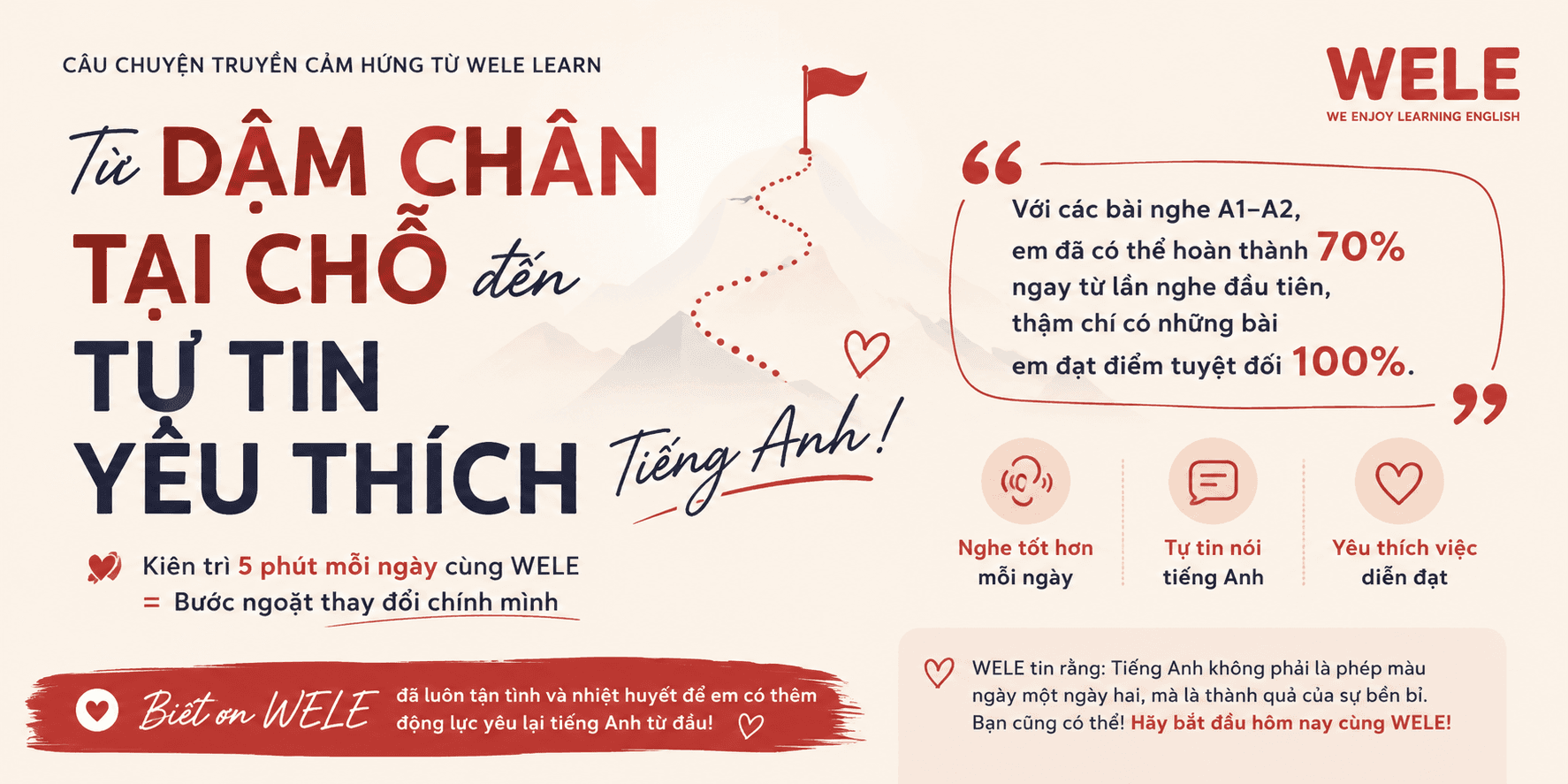
From Zero to an Exciting Comeback: Reclaiming English
"Once scoring less than 20% on even the simplest listening exercises, a Đồng Hành scholarship student kept at it, spending at least 5 minutes a day practicing listening with WELE. Today, that same student can score 70-100% on the very first listen and feels far more confident using English. It's not magic — daily persistence is what made the change happen. Heartfelt stories like this one are what keep WELE motivated to keep spreading the joy of learning English to young people across the country, especially those facing hardship. Thank you for trusting WELE and journeying together toward mastering English! ❤️"

How to Prepare for TOPIK Listening with Daily Dictation Practice
Prepare for the TOPIK listening section using WELE's dictation method. Get a structured study plan, learn common question types, discover frequently tested vocabulary, and understand why daily transcription practice outperforms traditional test prep.

Steps to Improve Your English
Steps to improve your English — this article has been shared thousands of times and even printed in a book. I hope it helps you find direction in your practice, and understand clearly what dictation can do for you.

Connected Speech: The Secret to Understanding Fast Native Speakers
Why do native speakers say "gonna", "wanna", "lemme"? Understanding connected speech so you're never confused again.